


SPECIALIST-LED DENTAL IMPLANTS IN SKOKIE
Dental Implants, Thoughtfully Planned Around You.
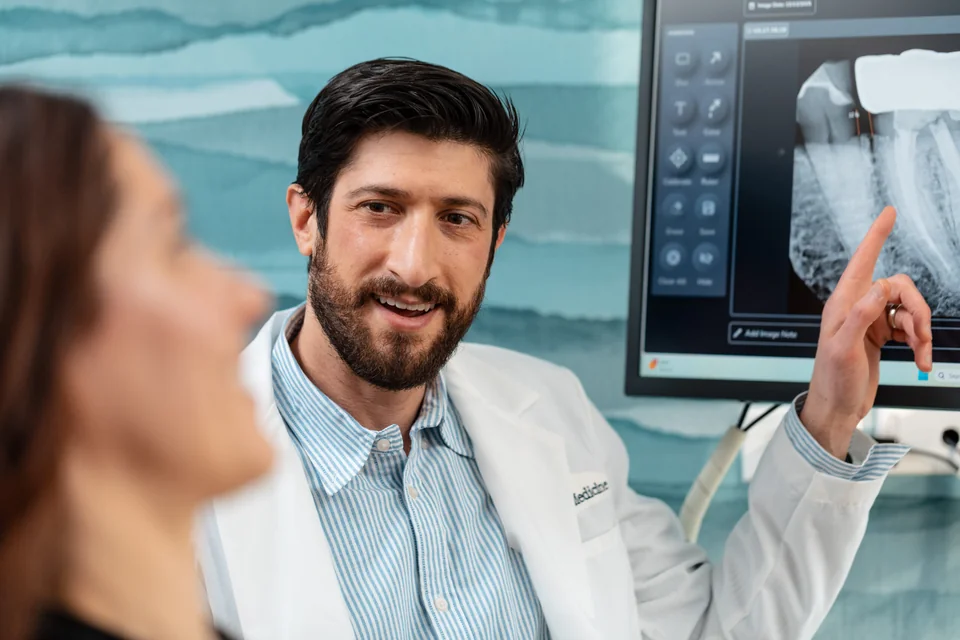
Led by Dr. Scott Drucker, a board-certified periodontist and implant surgeon, our team coordinates surgical and restorative care to create a personalized plan for your smile.
Begin with what is missing
What Are You Trying to Replace?
An implant is a small anchor placed in the jaw. For one missing tooth, it supports a replacement tooth called a crown. For several missing teeth, implants can support a bridge or a full set of replacement teeth.
01One Tooth
A Single Implant & Crown
One Replacement Tooth
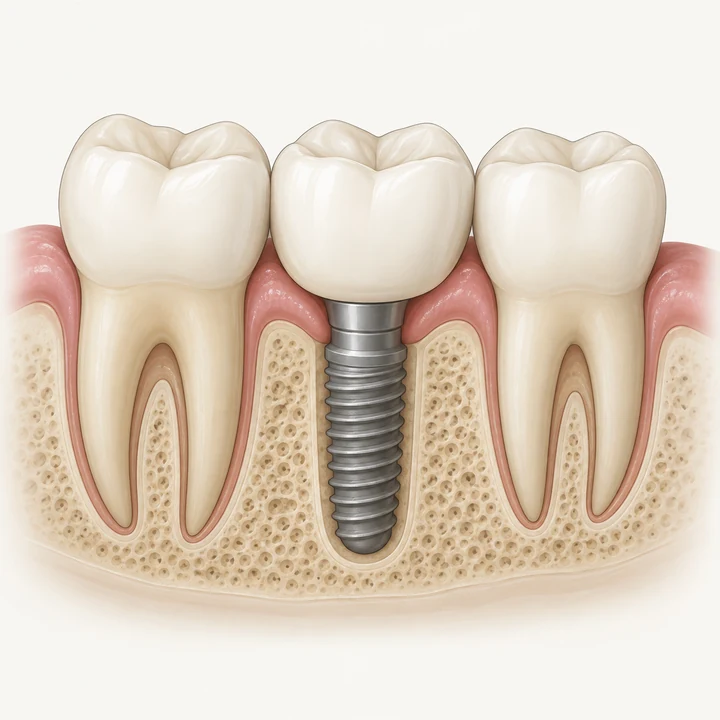
For a missing front tooth or molar, one implant can support a crown, the visible part you bite with. It replaces the missing tooth without shaving down neighboring teeth to use as supports.
02Several Teeth
An Implant-Supported Bridge
Connected Set of Replacement Teeth
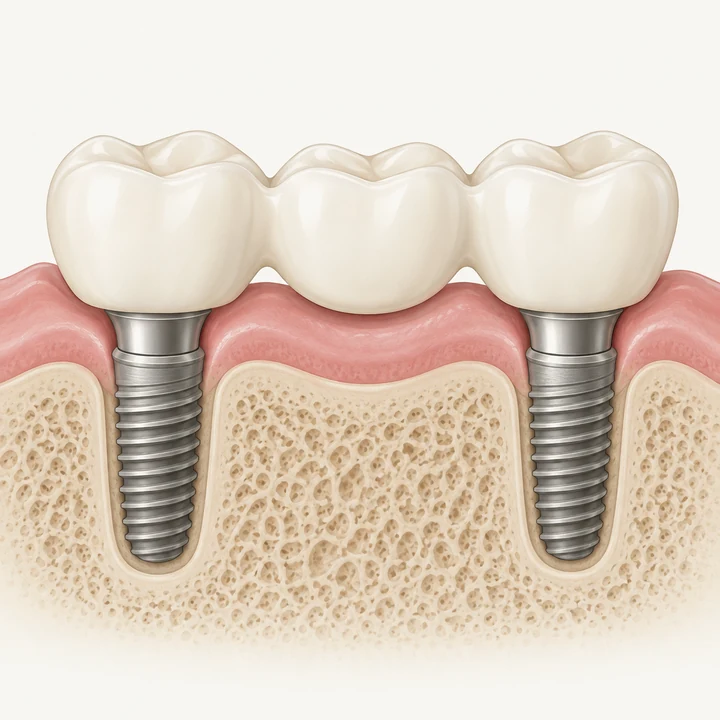
When several teeth in a row are missing, implants can support a bridge across the gap. You may not need an implant for every tooth; separate implants and crowns may suit other spaces.
A Removable Implant Denture
Removable · You take it out to clean
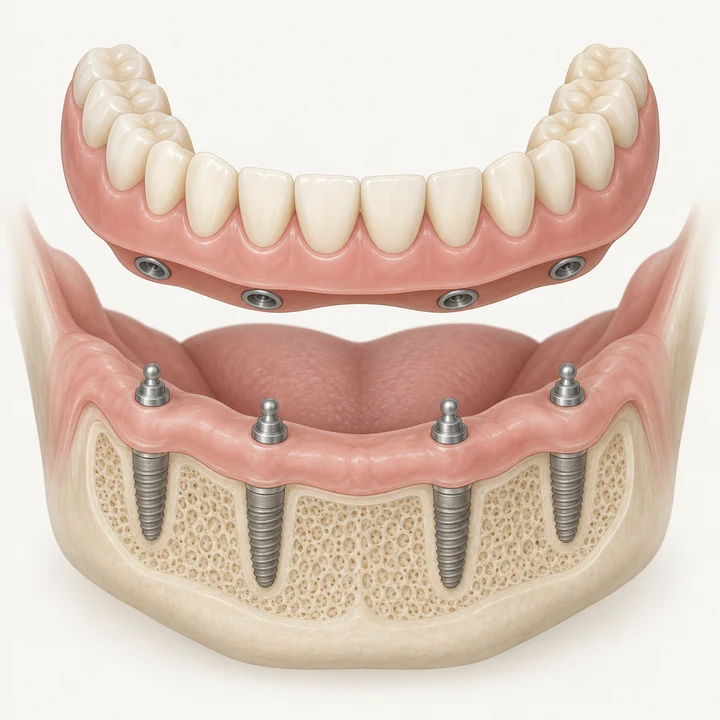
Also called an overdenture, this option connects to implants for added stability. You remove it daily for cleaning. It is designed specifically for your needs.
Fixed Full-Arch Teeth
Fixed · Removed by your dental team
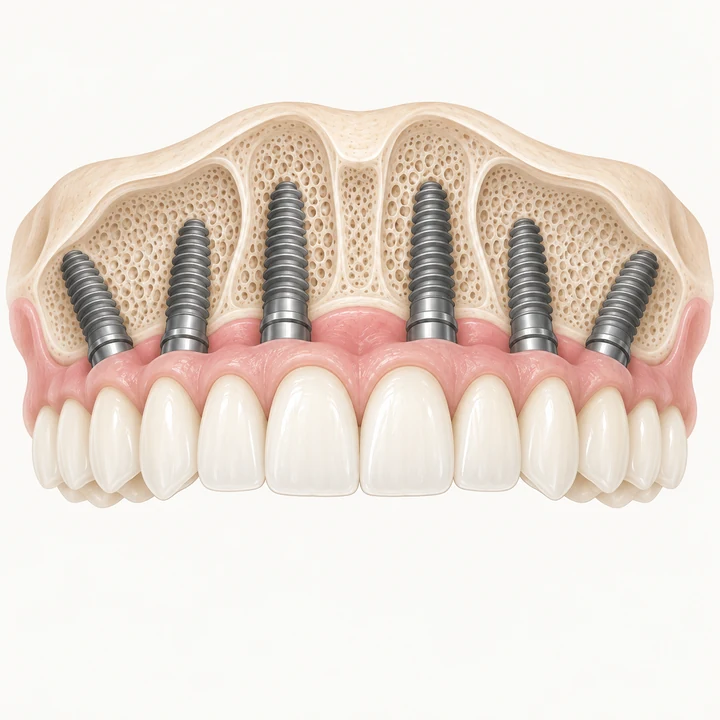
A full upper or lower set of teeth attaches to several implants. It stays in place permanently; only your dental team removes it when needed. Often called All-on-4 or All-on-X, this approach uses the number of implants your anatomy and restoration require.
Explore All-on-4 & All-on-X →The right choice starts with what can be preserved, the available bone and gums, your bite, and your preferences for fixed or removable teeth.
Before a tooth is removed
Sometimes an Implant Can Be Placed the Same Day.
When a tooth cannot be saved, we plan its removal and replacement together. Some sites allow an implant right away; others need healing or bone grafting first.
Placing the implant and choosing your temporary tooth are separate decisions. Here is how they fit together.
After Healing
Final Restorations
Once the implant and surrounding tissues have healed, we deliver your final crown, bridge or other replacement teeth, checking their fit, appearance and bite.
A foundation for your replacement teeth
What If There Is Not Enough Bone Or Gum Tissue?
Not every implant needs a bone graft. We start with the planned position of your replacement teeth, then assess whether the bone and gum tissue can support that plan. If more support is needed, site development means preparing that foundation before or during implant treatment.
Bone Grafting
Graft material can help maintain or rebuild bone in an area where a tooth is missing or being removed. It also may be necessary at the time of implant placement.
Ridge Augmentation
Rebuilding the width or height of the jaw ridge may create room for a planned implant.
Sinus Augmentation
In the upper back jaw, a sinus lift can create space to develop bone beneath the sinus. Sometimes the sinus lift can be completed at the time of implant placement, and other times it requires its own procedure prior to implant placement.
Gum Grafting
Healthy gum tissue helps support healthy implants. If there is not enough tissue around a planned or existing implant, we may recommend gum grafting to support its long-term health.
Preserve first. Plan together.
The Goal Isn’t Simply to Place an Implant.
First, we consider whether your natural teeth can predictably be maintained. When an implant is appropriate, we plan the surgery and the replacement teeth together.
Implant position, bone and gums, bite, appearance, and access for cleaning all shape the plan. Your general and restorative dentists coordinate with our specialists as your care requires.

Dr. Scott Drucker
Periodontist & implant surgeon
Planning and care for the implants, bone and gum tissue that support your replacement teeth.

Dr. Paul Sung
Prosthodontist
A specialist in designing, restoring, and replacing teeth, with attention to their fit, appearance, bite and everyday function.

Dr. Jennifer Mullarkey
General dentist
Experienced in restorative and cosmetic dentistry, with a focus on comfort, clear communication, and care tailored to your smile.
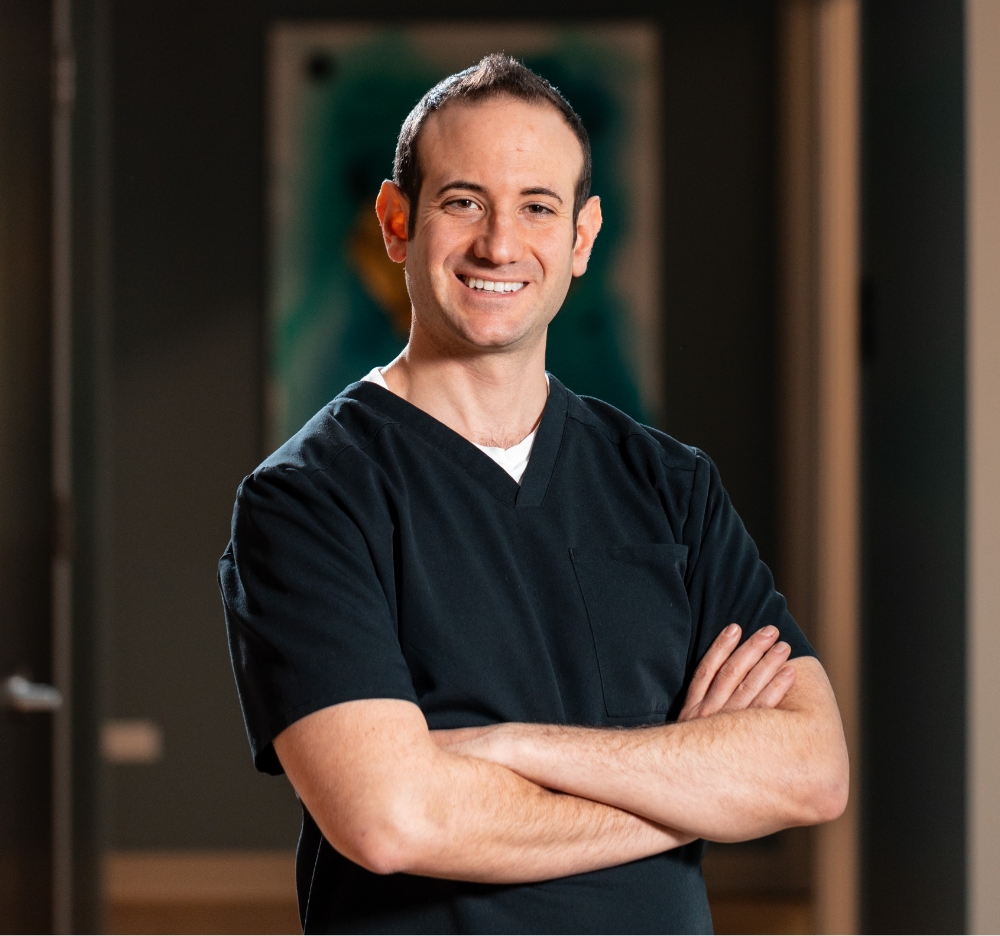
Dr. Michael Levi
General dentist
Comprehensive dental care with a focus on overall health and everyday function.
A clear sequence
How Implant Treatment Works
Understand
We discuss your goals and examine your teeth and gums. CBCT imaging gives a three-dimensional view of the jaw, while TRIOS digital scans record your teeth and bite.
Plan
Decide what to preserve or replace, whether grafting is needed, and whether immediate or staged treatment fits. Design the replacement teeth alongside the implant positions.
Place & Heal
Place the implants and allow the bone and tissues to heal. A temporary replacement is provided when appropriate, with instructions for eating, cleaning and follow-up.
Restore
Fit the final crown, bridge, overdenture or full-arch teeth. Review your bite and cleaning routine, then continue regular professional maintenance.
Cost & Timing
A Personalized Treatment Estimate
Your treatment plan determines your cost. We’ll provide a personalized estimate that includes any necessary extractions, implants, grafting, temporary restorations, and final replacement teeth—and review the plan and fees with you before you decide.
How Long Will It Take?
Timing depends on your starting point. Extractions, grafting and healing may add stages; immediate placement may combine some visits.
Implants generally need several months to heal in the bone. We will explain what you can expect to wear during that time and when your final teeth may be ready.
Replacing a full upper or lower arch? Explore the full-arch pathway →Common questions, clear answers
Dental Implant FAQs
How much does a dental implant cost?
Can an implant be placed the same day a tooth is removed?
Can I have a temporary tooth while the implant heals?
Do I need one implant for every missing tooth?
What if I do not have enough bone?
What are my options if most or all of my teeth are failing?
Are implants permanent, and how long do they last?
Will insurance help with implant treatment?

Your next step
Start by Understanding Your Options.
Whether you are replacing one tooth or considering a larger plan, the first step is a conversation and a careful evaluation.
Request an Implant ConsultationOr call (224) 724-8600Considering a Full Set of Fixed Teeth?
Explore the treatment, team and planning behind Crown’s full-arch care.
Explore All-on-4 & All-on-X →Your implant consultation
Request an Implant Consultation
Tell us what you would like help with—even if you are not sure which treatment fits. Our team will contact you to arrange your consultation.
Submitting an inquiry does not commit you to treatment. Please do not include private medical information in the message field.
